
Hydroponics Farming
Hydroponics Farming
A classic soilless farming technique that involves growing plants in a water solvent with mineral nutrients. The plants absorb the nutrients they need from the solution.
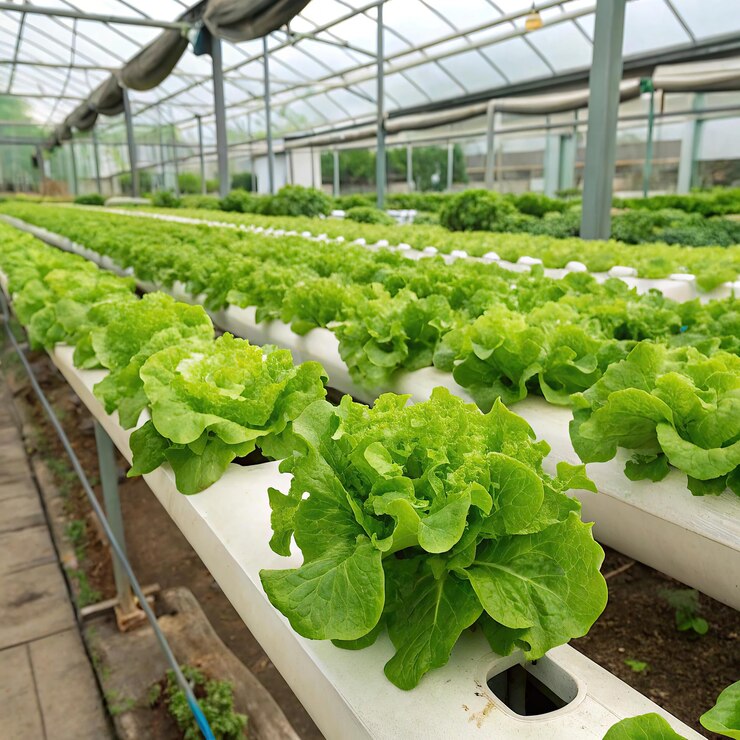
Hydroponics is a classic and innovative soilless farming method that involves growing plants in a water-based nutrient solution instead of soil. In this system, essential mineral nutrients—such as nitrogen, phosphorus, potassium, calcium, and magnesium—are dissolved in water and delivered directly to the plant roots. Because the roots are exposed to a nutrient-rich environment, plants can absorb everything they need more efficiently, leading to faster growth and higher yields.
How You Start Hydroponics Farming
Hydroponics farming is an innovative technique for growing plants without soil, using a nutrient-rich water solution. It offers a sustainable and efficient way to grow crops with less water and space. Starting hydroponic farming involves setting up the right system, choosing appropriate growing mediums, and maintaining the nutrient solution. Here's how you can get started:
- 1.Understand the Basics: Learn the fundamentals of hydroponics and the different types of systems available, such as Deep Water Culture (DWC), Nutrient Film Technique (NFT), and Ebb and Flow.
- 2.Choose a Hydroponic System: Pick a system based on your space, budget, and crop preferences. For beginners, DWC or Ebb and Flow are good options.
- 3.Select the Right Growing Medium: Choose a medium like coco peat, rockwool, or clay pellets to support the plants' roots.
- 4.Set Up the System: Install a reservoir, water and air pumps, grow trays, and net pots for plant support. Provide adequate lighting if growing indoors.
- 5.Mix the Nutrient Solution: Prepare a nutrient solution by mixing hydroponic nutrients with water, ensuring the pH is between 5.5 and 6.5.
- 6.Choose Crops to Grow: Start with easy-to-grow crops like leafy greens or herbs. As you get more experienced, try growing vegetables like tomatoes or peppers.
- 7.Monitor and Maintain the System: Regularly check the pH, nutrient levels, and light conditions. Keep the system clean to avoid disease and algae buildup.
- 8.Harvest: Harvest crops when they are ready, typically within a few weeks, and enjoy the benefits of faster growth and higher yields.